Visit blogadda.com to discover Indian blogs

Tuesday, April 19, 2011

And the Pulitzer Prize goes to....

The Washington Post was recently quoted "It's time to welcome a new star in the constellation of great writer-doctors," Days later, this star “new star in the constellation” bagged the Pulitzer Prize, 2011 in the "general non-fiction" category.
It was talking about none other than Dr. Siddhartha Mukherjee, the Indian–American, who received one of the most coveted awards in the United States for his work - The Emperor of All Maladies: A Biography of Cancer


For information on Pulitzer 2011 winners,

A Columbia University cancer researcher and a physician, Dr. Mukherjee, embodies his work in a nearly  600-page book that is part history, part memoir, and part the story of cancer research over the last few decades.
The Pulitzer citation called the book, 'An elegant inquiry, at once clinical and personal, into the long history of an insidious disease that, despite treatment breakthroughs, still bedevils medical science.'
 
One reason the book hit the bestseller list is that it talks about such an unusual topic in such an intriguing manner. Also, that many readers know someone who is fighting cancer or has someone in the family who is undergoing treatment for it.

As Mukherjee writes in the first chapter, while describing his initial encounters as a physician with cancer patients  - "Cancer was an all-consuming presence in our lives. It invaded our imaginations; it occupied our memories; it infiltrated every conversation, every thought. And if we, as physicians, found ourselves immersed in cancer, then our patients found their lives virtually obliterated by the disease."

Dr. Siddhartha Mukherjee
He also makes a reference to Aleksandr Solzhenitsyn's novel Cancer Ward : "The diagnosis of cancer-not the disease, but the mere stigma of its presence- becomes a death sentence for Rusanov (the protagonist of cancer-ward).


He looked at cancer from the very early recordings of the disease, some 4000 years ago & thus began to trace the history of cancer from its first recorded description.
All this as he struggled to answer questions from his patients, "Where are we in the war on cancer? How did we get here? What happens next?" A grueling year in a cancer training program left him 'in stunned incoherence.'


The book may not provide any breakthrough in medicine to cure cancer, nor is it any sort of counseling for the cancer patients. But we still hold it in high regard for the mere audacity of the author to write about so tabooed a topic. It definitely provides a deeper understanding of cancer as a disease & thus stems the compassion for the cancer patients.

We give a hats off to the concept & the spirit that it is written in. What about you?
 

Thursday, April 14, 2011

"Leading characters in fiction" by Nitisha Pande

"Often times when we read, we experience something not short of incredible.
We laugh out loud at a Suppandi joke we’re reading at the train station. We spend sleepless nights over a novel by Stephen King. We are filled with impassioned idealism after reading Rand. We hold back tears while flipping the pages of a Nicholas Sparks novel.

That is the power of words.  It allows us, rather provokes us, to imagine. To let our imagination run wild.What turns a novel from good to great, from forgettable to memorable, is the strength with which the characters are portrayed. Some characters inspire, some make us question, but their most common consequence is, they become a part of our mental imagery. Indelible images are imprinted in our mind of the Howard Roarks’ and Jason Bournes’ of the literary world, which is why avid readers often shirk from watching the film adaptions of their favourite books.  Here’s a bunch of characters that have made their place in fiction, for eternity.


1. Sherlock Holmes
(Adventures of Sherlock Holmes –
Sir  Arthur Conan Doyle)

Detective par excellence, chemist, violin player, boxer, swordsman- these are just a few of the talents Doyle embodied Holmes with.  Even for the non-reader, Sherlock Holmes is the archetypical spy and crime solver. He has cemented his position as the most loved detective in the fiction scene.
Unforgettable Quote: "How often have I said to you that when you have eliminated the impossible, whatever remains, however improbable, must be the truth? We know that he did not come through the door, the window, or the chimney. We also know that he could not have been concealed in the room, as there is no concealment possible. When, then, did he come?"


2.  Howard Roark and Dagny Taggart


The Fountainhead by Ayn Rand
If you check on Facebook, Objectivism is a religion. It is a philosophy by Ayn Rand,  that proclaims the virtue of selfishness. The Fountainhead and Atlas Shrugged have long been cornerstones of the fictional world, and copies of these books can be found on the shelves of every young idealist.


Unforgettable quote: “Man cannot survive except through his mind. He comes on earth unarmed. His brain is his only weapon. But the mind is an attribute of the individual, there is no such thing as a collective brain. The man who thinks must think and act on his own. The reasoning mind cannot work under any form of compulsion. It cannot not be subordinated to the needs, opinions, or wishes of others. It is not an object of sacrifice.”

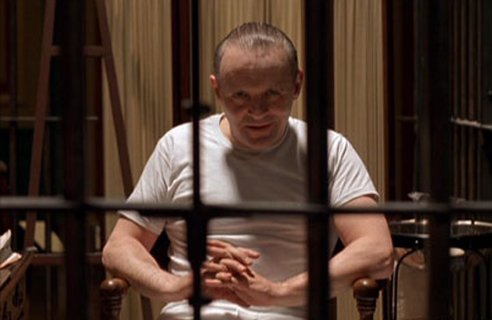
3.  Hannibal Lecter
(Silence of the Lambs – Thomas Harris)

Thomas Harris's Hannibal Lecter has exquisite taste, is well read, surrounds himself with utter beauty and is the meanest killing machine on the face of the literary earth. Criminally observant, he often sends tickles down the strongest spines.
Unforgettable Quote: “A census taker once tried to test me. I ate his liver with some fava beans and a nice Chianti.”


4. Lisbeth Salander

She’s the central character in the outrageously popular Millennium trilogy by the Swedish author, Stieg Larsson. A social outcast, a homosexual, covered in piercings, often mistaken for a teenager this pint-sized death-pixie on wheels embodies the “female asskicker,”!
    
(the Millenium series by Stieg Larsson)

5. Atticus Finch:

To Kill a Mockingbird by Harper Lee

With such moral upstanding values, Harper Lee’s Finch has secured his place as our all-time favourite father figure. 
Unforgettable Quote: “The one thing that doesn't abide by majority rule is a person's conscience,” he says. Amen.


A librarywala fan 

Sunday, April 10, 2011

Paperbacks and Hardbacks V/S E-books

Reading books has always been a habit I’ve followed, rather a treasured hobby. I have always regarded a book as an art object, as an investment. However, the growing presence of Amazon's Kindle & the Nook force me to think about how a person who just can't part with books would feel about one of these gadgets.
I believe, a book lover would always prefer a paperback edition of a given book to the electronic version. And there are numerous to support it.


One, the Kindle or Nook doesn't create a feeling of reading like a book does. Admit it- that anticipative feeling while turning the pages of Jeffrey Archer’s Prisoner of Birth won't be felt as you tap your e-reader to scroll down and read more.
I remember collecting old copies of the Enid Blyton series from my grand mom’s house & devouring on them throughout the holidays. Books remain readable for many years, given that paper has a much longer life span than most digital forms whereas E-book formats continue to change through time.
Plus, you can’t rule out the possibility of documents getting lost in cyberspace. Worse off if the system of a Kindle crashes, you lose your precious books unless you have backup. 
For someone who reads pretty often, a book comes in much more handier than the e-book reader. Books are best companions on travels as they don't have a battery life - whereas, a moment of anxiety on the climax of a gruesome thriller read can abruptly come to a dissappointing halt , in case, the e-books batteries are not charged. 

As for the economy of the e-book reader, not all books are available free on the net, especially the best-sellers. In case they are, you cannot rule out copyright issues. The print versions of books often cost the same as the ones available online & there isn’t even a high cost involved in getting hold of the paperback edition. 


You can always walk into the nearest bookstore, read a few excerpts & buy it if it suits your taste. Or even better, you can rent-a-book from http://www.librarywala.com/

The smell of a book be it an old, musty book of Shakespeares’s Hamlet or a freshly printed copy of the Harry Potter series is always fulfilling. There is a sense of comfort on the touch of its pages touch of its pages both - yellow & white.
From an author’s point of view too, paperbacks/hardbacks are a more concrete evidence of their efforts as against e-books. Additionally, the potential for piracy of e-books may make publishers and authors reluctant to distribute digitally. Copyright infringement may be involved because copying is involved-sometimes without the author’s/publisher's knowledge.
E-books suit one section of the society really well - students. They are pretty much more convenient  to use, unburdening students from carrying a load of books. They are also beneficial in cutting back textbook price, offering a greener choice as opposed to a thick 1,000-page encyclopedia.
Given that these gadgets are convenient and appealing, they save space & carry the “environment friendly” tag. But as someone who has resorted to the experience of picking up a book to read, would you let these reasons take over your paperbacks & hardbacks.
Make your choice. 

Thursday, March 31, 2011

"Cricket World Cup 2011"


The religion called Cricket World Cup, the God called Sachin Tendulkar, the team Bleeding Blue, the followers that outnumber the followers of any creed……


The Cricket World Cup – a 4 yearly phenomenon which infects people far and wide reaching nations. This time around, there’s something even more special about this episode. Its being held in the Asian subcontinent which makes us Indians even more crazy than we already are.

When the various-colored people of the gigantic populace forget their differences and bow down to the sport that swells up to assume the importance of a religion & the ruling God of this religion “Sachin Tendulkar.
CWC 2011 is even more behemothish because one, the Indians are counting upon their God to bring home the sacred World Cup plus the possibility of this one being his last chance to do so.

All eyes shall be glued to the Master Blaster throughout the tournament. Fans & team-members, alike, are expecting him to uphold and embellish the nation’s honor, something that he has been doing ever since he wore India’s jersey.  After crossing milestone after milestone, he is now on his way to achieve the most coveted trophy in a sportsman’s career, the World Cup trophy.

People of all age groups talking about CWC'11 everywhere - at workstations, outside a paan shop, over BBM, over FB, and now over the Librarywala blog! It speaks for volumes for its(grand)self.


The feeling of competition, of defeating the opposite team and proceeding a step ahead to walking away with the trophy is so pure and untainted - even profanities aren’t taken offense to.
Yesterday’s victory celebrations at Carter road(Mumbai), India Gate(Delhi) and possibly every other nook and corner of the country stands as a concrete testimony to this. A first person account is all it takes to realize how sacred the cup is to the Indians and the sheer spirit of sportsmanship that took birth in every Indian soul, the day India played its first match.


Aariz Rizvi
                            A group reveling in Delhi


 people mounted on a hoarding frame in Mumbai

                                                                                          
One day when reveling on the roads with strangers won over any high-end start studded “private party”. The noise surpassed the human audibility meter as drums played at the loudest and hardest, songs blared from different cars, people loudly cheered & danced to the tunes of “INDIA..INDIA”. For the less loud, whistles did the trick!!!!

When some people stayed back in their car and enjoyed the view outside, some chose to sit on the window of the cars to feel the swing of the celebration while the rest jumped out when they saw the cheering people & ultimately joined the swelling crowd. Every flag that passed by was greeted with an applause –it was almost like hooting but all in good spirit.

Meanwhile, the drummers continued playing different tunes – inspired different rants (using language that isn’t otherwise accepted), but the good cheer absorbed all and sundry. 

Lucky ones, like us, managed to lay hands on the candy being distributed. The unlucky ones, ran into cops who hindered the merry making but let off in good spirit.This celebration went on till the wee hours of the morning, and would continue even further had it not been for the cops.

Blinded by the victory over our neighbors at Mohali, but brought to light by the fact that the next ordeal (at Wankhede Stadium, Mumbai) shall be the final and the fateful.


Every Indian, including the ones outside of the physical boundaries of the subcontinent is waiting for the calendar to show April the 2nd, 2011 and the clock to strike 2:30 IST. The tingling anticipation will be much more edgy, the spirit a lot more intense, the celebrations, if India reigns and wins the sacred trophy, a lot more colorful. And the town shall be painted a lot more redder than it already is!!!!

- Arjun Gupta


Saturday, March 26, 2011

Librarywala Recommends: 5 Spine Chillers for Mystery Lovers

Here's 5 different kinds of books in the genre of Mystery that have been raising hair for decades. Read on to find out more and dont hesitate to contribute to the list...


(Thriller/horror)

Hannibal Lecter - the ultimate villain of modern fiction.

A young FBI trainee.

An evil genius locked away for unspeakable crimes.

A plunge into the darkest chambers of a psychopath's mind-- in the deadly search for a serial killer...

Read the five-million-copy bestseller that scared the world silent...


(Neo-noir crime novel)

On January 15, 1947 the severed body of Elizabeth Short was found. Her murder is one of the highest profile unsolved cases. The Black Dahlia uses facts from the case to create a story of mystery & obsession.

James Ellroy's Black Dahlia is a masterpiece among murder mystery novels. Ellroy tells Elizabeth Short's story through Bucky Bleichert, a police officer who is assigned to investigate the murder.

Bucky's negative yet heroic character gets obsessed to the edge of madness, and Ellroy takes the reader along on that journey. 


(Satire in crime)

R.J. Decker a neophyte private eye is fishing for a killer. Thanks to a sportsman's scam there's a body floating in Coon Bog, Florida -- and a lot that's rotten in the large-mouth bass tournaments. Decker teams up with an eccentric hermit with an appetite for road kill. And here his own life becomes part of the stakes. For while the "double whammy" is the lure, first prize is for the most ingenious murder.


(First person criminal story)

The most chilling and believable first-person story of a criminally warped mind. Lou Ford is the deputy sheriff of a small town in Texas.  The worst thing most people can say against him is that he's a little slow and a little boring.  But, then, most people don't know about the sickness--the sickness that almost got Lou put away when he was younger.  The sickness that is about to surface again.


Philip Marlowe, the genre's most influential detective & his wise-cracking style and capacity to endure punishment from his foes introduces a new kind of "performance" to hard-boiled fiction, in which victory was more often verbal than physical.
When a dying millionaire hires Philip Marlowe to handle the blackmailer of one of his two troublesome daughters, Marlowe finds himself involved with more than extortion.
Chandler's ironic tone and extraordinary metaphors focused readers on individual scenes, which he excelled at writing.


Thursday, March 24, 2011

Sway by Ori & Rom Brafman


Ori & Rom Brafman reveal the much needed facts in “SWAY – the irresistible pull of irrational behaviour”

Genre: non-fiction (psychology)

Our say: Must be on bookshelf – read it before taking any important decision 
or when you think you are “swayed”. 
Fit for all adults, working professionals, non-working, irrespective of age/occupation.


Review:

It is said “Do not judge a book by its cover” – but the cover-page of this book effortlessly conveys the message. Inspite of the clear direction to go leftwards, the person is shown moving in the opposite direction.

Beneath this interesting cover, the book opens with a mind numbing example of how a pilot, Jacob van Zanten famed for his spotless flying career makes the one worst decision of his flying career that not only costs him his life but also the lives of numerous others in the aircraft. 

And all this only because he was so committed to reaching the destination on time – so much that he took off without airport’s ATC (air-traffic control) clearance. “Swayed”, is what the authors call him, by irrationality.


The authors quote many instances like this which highlight the excessive extent of irrationality seen often in people’s decisions –the most remarkable of them being the one where an experiment is conducted among students of a b-school to bid for a 20$ bill.

The one who bids highest – gets the bill. Rationally, the bid should have stopped at 20$ - surprisingly it goes upto 200$...
“How can management school students make this folly?” We may wonder. And that’s precisely what the authors attempt to answer.


All through the various examples, they speak about the different aspects that make us victims of irrationality – from loss aversion to diagnosis bias.
Each of these concepts is linked so intelligently & practically to real-life situations that it forces the reader to stop and think about the reasonability quotient of his/her choices.

The examples along with their succinct interpretation and synopsis are veritably the essence of the book and make it what it is.

A little deeper into the book, it talks about a mind-boggling phenomenon called “chameleon effect”.

What the Brafmans(Ori & Rom)do show through this concept is that diagnosis bias can lead to the patient themselves changing their behaviors to fit the diagnosis. Once people are labelled, they tend to live up (or down) to those labels, or take on the characteristics of the diagnosis. 


The epilogue of the book talks about how one can resist this irresistible pull – extremely simple ways to withstand these sways. “The best strategy for dealing with the distorted thought process that results from value attribution is to try & observe things for what they are, not just for what they appear to be.” 
However, the major problem faced here is that humans work against a lifetime of learned behavior, so it’s not so easily undone as simply “observing things for the way they really are.”

However, the fact remains that Sway provides a lot of learning and once a reader reads this book, he’s definitely more prepared to take rational decisions and not be swayed.